


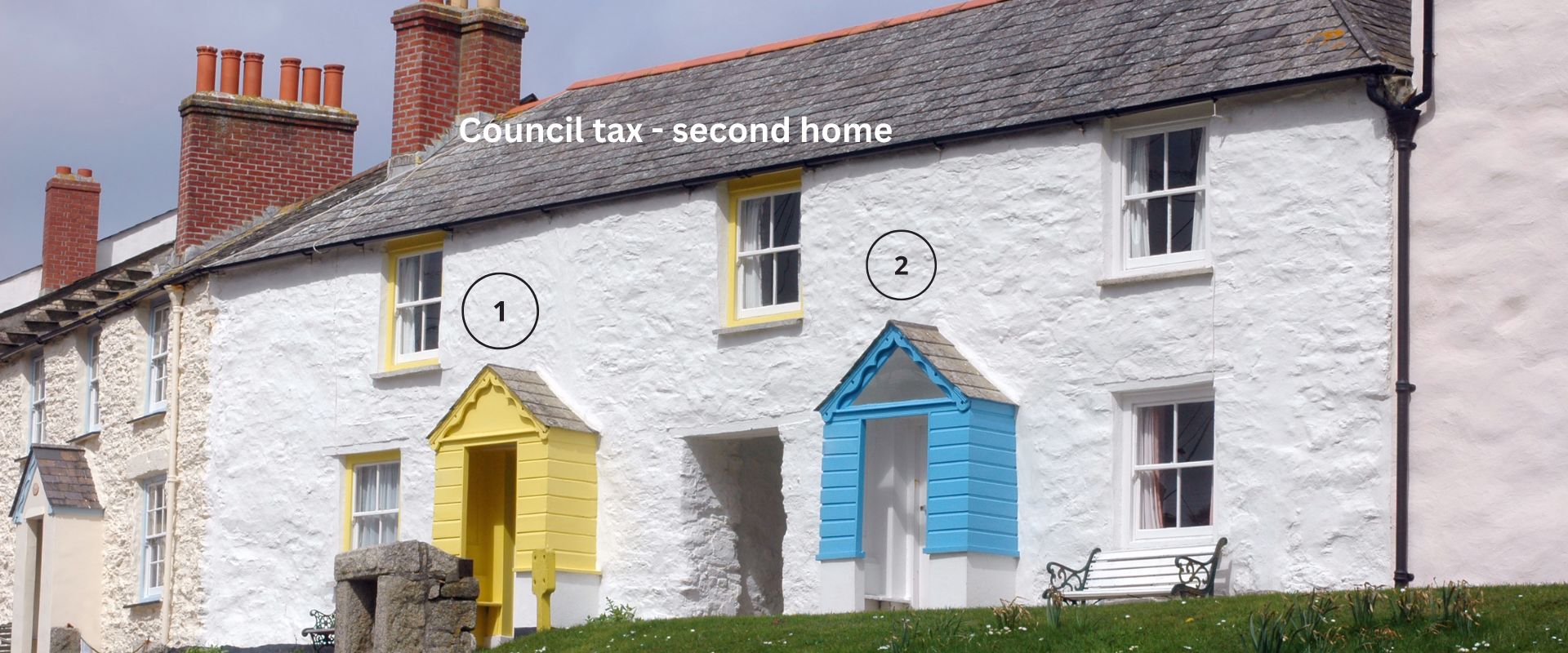
Council tax and holiday lets in Cornwall: what you need to know
Introduction
Owning a second home or holiday let in Cornwall involves navigating both council‑tax and business‑rate obligations. Recent legislation allows councils to charge significant premiums on second homes. This post explains when you’ll pay council tax or business rates, how much you might owe and how to qualify for reliefs.
Council tax premiums for second homes
Under the Levelling‑Up and Regeneration Act, local authorities can charge a council‑tax premium on second homes. Cornwall Council approved a 100 % premium (double council tax) on second homes effective 1 April 2025. This means owners of furnished properties not used as their main residence will pay double the standard council‑tax rate.
Exceptions
The premium does not apply to:
- Annexes used as part of the main home, job‑related accommodation or seasonal homes where year‑round occupation is prohibited.
- Properties actively marketed for sale or let as a main residence, and unoccupied furnished properties where probate has recently been granted.
If you believe an exception applies, you must notify the council and supply supporting evidence.
Business rates vs council tax on holiday lets
Self‑catering properties can be assessed for business rates rather than council tax if they meet specific criteria:
- The property was available for commercial letting for at least 140 nights in the last 12 months and will continue to be available for 140 nights in the next 12 months.
- It was actually let for at least 70 nights in the last 12 months.
The Valuation Office Agency (VOA) maintains the business‑rates list and decides whether a property qualifies.
Small business rate relief
If your holiday let qualifies for business rates, you may be eligible for small business rate relief (SBRR), which can dramatically reduce or eliminate your rates bill. What you should know if you operate a single holiday let and its rateable value is below £12,000, you pay no business rates; values between £12,000 and £15,000 attract a sliding scale of relief. The 2025 Autumn Budget extended SBRR for businesses expanding from one property to two, allowing them to keep relief for three years.
Council‑tax premium for second homes
Properties that do not meet business‑rate criteria or fall within an exception will be taxed as second homes. Councils can charge up to a 100 % premium, meaning you pay double the standard council‑tax rate; some Welsh councils charge up to 300 %. Cornwall Council’s premium applies from April 2025.
Calculating business rates
Business rates are based on your property’s rateable value, which reflects its open‑market rental value. You multiply this value by the business‑rate multiplier set by the government. There are a number of multipliers, noting that for the 2026–27 tax year the small business multiplier for holiday lets is 38.2 pence and the standard multiplier is 43 pence. Higher rateable values (>£500,000) are subject to a higher multiplier.
Applying for business rates
If your property meets the 140‑/70‑night criteria and isn’t currently rated, apply to the VOA using the relevant form. Keep records of your availability and letting days to support your application. If your property ceases to meet the criteria, inform the council to avoid penalties.
Conclusion
Understanding the difference between council tax and business rates and the new premiums for second homes is crucial for budgeting your Cornwall holiday let. Meeting the letting criteria for business rates can reduce your liability through small business relief. If your property doesn’t qualify, prepare for double council tax from April 2025 and explore exceptions if applicable.